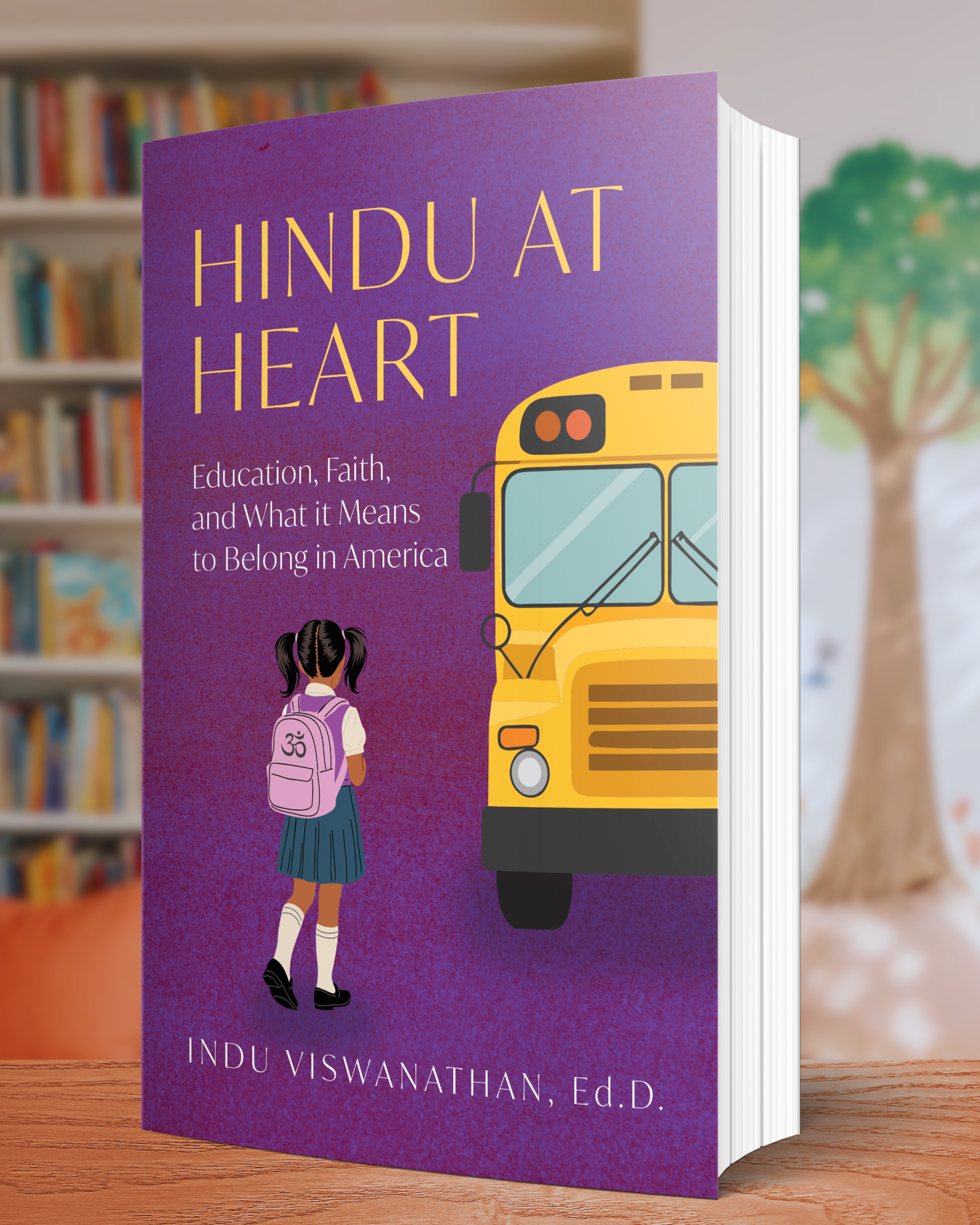
HINDU AT HEART
Education, Faith, and What it Means to Belong in America
Hindu at Heart explores what it means to grow up Hindu in America — and how public education has shaped the story of belonging for generations of Hindu American families and communities. Drawing on archival research, personal narrative, and in-depth interviews with Hindu American parents and young people, it traces the overlooked entanglement between faith, immigration, and schooling in the American story.
Who should read this book?
Hindu American families, students, and communities who want language, history, and context for experiences they have long sensed but rarely seen named.
Immigrants and diaspora communities of any background who have navigated the distance between home and school and wondered where that gap comes from.
Educators and school leaders interested in whose perspectives are represented in curriculum, whose are missing, and what those choices mean for students and families.
Anyone curious about the history of American public education—the assumptions it inherited, the purposes it has served, and how generations of immigrants have both been shaped by and helped shape it.
Readers interested in questions of difference and belonging who are curious about what becomes possible when we take another tradition's way of seeing seriously.
About the Book
What does it mean to grow up Hindu in America and how have schools shaped that story for generations of Hindu American families?
Hindu at Heart: Education, Faith, and What It Means to Belong in America reimagines the story of American public education through an unexpected lens: the place of Hinduism and Hindus in its long history of shaping citizens and negotiating American identity. From early missionary-influenced textbooks that cast Hinduism as antithetical to civilization and democracy to contemporary classrooms where Hindu American children encounter modern expressions of those inherited ideas, the book traces the overlooked entanglement of faith, belonging, and schooling.
Drawing on archival research, personal narrative, and in-depth interviews with Hindu American parents and young people, the book explores how public schools have long been a stage for America's encounters with the “other”—and how Hindu Americans have participated in and strengthened the democratic promise of public education. Moving between historical analysis and glimpses of homes and classrooms, Hindu at Heart listens closely to voices rarely heard in accounts of American education, revealing a story of striving, dialogue, and contribution.
At once scholarly and accessible, Hindu at Heart uses the Hindu American experience to ask larger questions about education, citizenship, and belonging: Whose ways of seeing are reflected in the institutions we share? What happens when they are not? And what might become possible when we learn to listen to one another with greater curiosity, integrity, and courage?